





Poland Sets Its Sights on the 2040 Olympics: A Transformational National Project Takes Shape
Poland has taken its first decisive step toward one of the most ambitious goals in its modern sporti
moreAxglo Strengthens European Network with Official Distributors in the UK, Czech Republic, Germany, and Slovak Republic
Axglo, the Canadian golf equipment specialist renowned for its premium push carts and golf accessori
moreVAT Becomes Official Supplier to Swiss-Ski and Backs Biathlon Star Amy Baserga
VAT, a global leader in high-end vacuum solutions, has signed a three-season partnership with Swiss-
moreThe Mountain Studio Reports 44% Sales Growth as Marcel Hirscher Targets Year-Round Outdoor Brand Expansion
The Mountain Studio, the premium outdoor apparel company co-founded by ski racing legend Marcel Hirs
moreSGS Expands Global Cycling Testing Expertise with Acquisition of EFBE
SGS, the world’s leading testing, inspection, and certification company, has announced the acquisi
more
"Business
Partner search for the Sports industry in Central Europe"
You are here » Home Page
» CE Sports Business News
» CEE Countries Continue to Grow
 2015-05-05
source own
2015-05-05
source own
CEE Countries Continue to Grow
2015-05-05
source own
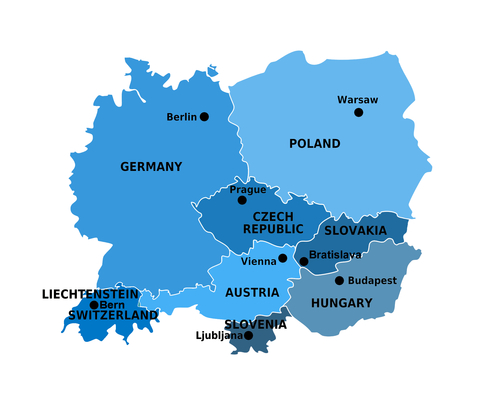
Central Eastern European economies continued on a solid growth path in the last quarter of 2014 as a consequence of robust household spending, together with a strong performance in Germany that fed through to the CEE region.
Although information from individual nations, released in February, was mixed compared to expectations, virtually all countries outshone the Euro Zone, demonstrating that the region was once again cutting the wealth gap with western neighbors, after numerous years of turbulence since the global financial crisis, which began in 2008.
Hungary was the star performer, with the best growth for the CEE region, achieving 0.9 % on a quarterly basis, adding up to annual growth of 3.4 % in 2014.
Slovakia followed close behind, increasing by 0.6 % from the earlier quarter, and 2.4 % for the year, prompting the country's finance minister to state that the state's own 2015 predictions earlier in February could possibly be too conservative.
Poland, the CEE region's most significant economy, demonstrated growth of 0.6 % per quarter, and 3.0 % for the year, short of expectations and far less robust compared to the previous quarter. Romania also slowed towards the end of 2014, but still confirmed a strong 0.5 % quarterly expansion.
"Given the headwinds from Russia together with the euro zone, I believe the Central Eastern European region is holding up reasonably well and growth and development continue to be quite resilient," stated Neil Shearing, chief emerging markets economist at Capital Economics.
Bulgaria lagged with a 0.3 % quarterly rise, along with the Czech Republic, which declined with a downturn of 0.2 % per quarter growth, however this was viewed as a one-off.
Indicators have highlighted growth in the the European Union's emerging East Region as improving, together with exports remaining uncertain, with the West's standoff with Russia over separatist fighting in Ukraine, rattling nerves along with the Euro Zone challenges.
"Despite the continued weakness in external demand, the Hungarian overall economy is progressively resistant to the variations in European Union growth," the country's Economy Minister, Mihaly Varga, declared. "The 4th quarter growth data imply that this trend could gain momentum."
Increasing household demand is playing a vital role in the majority of the CEE region, with Germany remaining –steadfast as Europe's largest economy, and key buyer of Eastern European goods, posting forecast-busting growth figures.
Officials additionally anticipate lower inflation to improve real wages, whilst the worldwide oil price decline will reduce business costs. Banks, too, see increasing loan books.
"We anticipate improved confidence of consumers as a result of the economic outlook," Libor Lofler, the chief financial officer of the Czech Republic's third-largest lender, Komercni Banka (BKOM.PR), claimed. "We might also see the growth of investments of businesses in the economy, allowing you to observe from our main financing deals that there are improving interest in investment financing and merger & acquisition financing."
In Hungary, likewise, lending may possibly improve after Prime Minister Viktor Orban recommended a truce with international banks; he has been urging them for years with lower taxes in exchange for offering increased lending opportunities.
Under a deal announced recently, the Hungarian state and the European Bank for Reconstruction and Development (EBRD) are going to combine their efforts to take a stake of up to 30% in the regional unit of Austria's Erste Bank (ERST.VI). Hungary will, in addition, reduce the amount it will take in from a windfall tax imposed in 2010.
To learn more about what CeSport can do for you click here
Follow us on twitter
Partner Search Marketplace
Expert Partner Search