





Poland Sets Its Sights on the 2040 Olympics: A Transformational National Project Takes Shape
Poland has taken its first decisive step toward one of the most ambitious goals in its modern sporti
moreAxglo Strengthens European Network with Official Distributors in the UK, Czech Republic, Germany, and Slovak Republic
Axglo, the Canadian golf equipment specialist renowned for its premium push carts and golf accessori
moreVAT Becomes Official Supplier to Swiss-Ski and Backs Biathlon Star Amy Baserga
VAT, a global leader in high-end vacuum solutions, has signed a three-season partnership with Swiss-
moreThe Mountain Studio Reports 44% Sales Growth as Marcel Hirscher Targets Year-Round Outdoor Brand Expansion
The Mountain Studio, the premium outdoor apparel company co-founded by ski racing legend Marcel Hirs
moreSGS Expands Global Cycling Testing Expertise with Acquisition of EFBE
SGS, the world’s leading testing, inspection, and certification company, has announced the acquisi
more
"Business
Partner search for the Sports industry in Central Europe"
You are here » Home Page
» CE Sports Business News
» Russia’s 2018 FIFA World Cup infrastructure update
 2014-06-18
source own
2014-06-18
source own
Russia’s 2018 FIFA World Cup infrastructure update
2014-06-18
source own
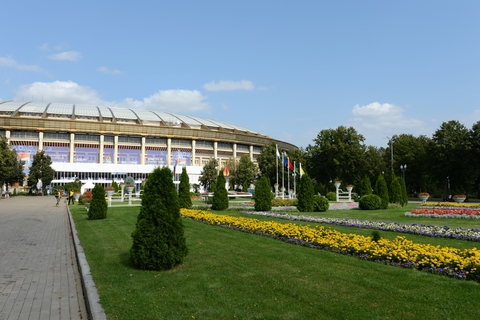
In light of the start of the 2014 FIFA World Cup in Brazil, the Russian Minister of Sport, Vitaly Mutko, has released a new estimate of the costs for the 2018 World Cup in Russia. Since the initial estimate, the cost for holding the tournament has now dropped by 44 billion rubles ($1.3 billion) to 620 billion rubles ($17.5 billion). This estimate should be taken with a grain of salt, experts say, as previous estimates for stadium construction projects in Russia have not come close to the final numbers. However, this estimate does not only cover stadium construction, it also includes over 300 other projects including the athletes’ accommodations, power engineering facilities and enhanced communication installations.Mutko also took the opportunity to dismiss the suggestions of corruption and delays with the construction projects. He noted that with every major world event there will always be some who have a pessimistic view point but, “Events such as the Olympics and the World Cup create thousands of jobs and help the country to move to a new level.”The cities of Kazan and Sochi are already prepared for the event and the Kazan Arena has been completed. The stadium evokes the architectural style of the Emirates Stadium, the home of the London club Arsenal FC. It was designed by Populous, the same company who designed the Emirates Stadium, the new Wembley Stadium, and Wimbledon Centre Court.Many are questioning the high cost to build the 12 arenas that Russia needs to be prepared for the World Cup. The Kazan Arena cost 14.3 billion rubles ($403 million). This price matches the cost for Brazilian stadiums, built for the 2014 World Cup that can hold up to 71,000 spectators, such as the Mane Garrincha National Stadium. In comparison the Kazan Arena can only accommodate 45,000 spectators. The stadiums in Brazil with similar capacities cost around half as much. The Arena Das Dunas stadium which holds 45,000, cost $205 million, the 44,000 seat Arena Amazonia stadium cost $260 million, and the Arena Pantanalan stadium cost $255 million and can accommodate 44,000 people.The Fisht stadium was built for the Olympic Games in Sochi and will also be used to host the World Cup. The stadium was specially designed by the architectural firm Popoulous to allow more light into the stadium in winter and to provide shade for the stands in summer. The firm’s portfolio also includes Yankee Stadium in New York, the So Kon Po stadium in Hong Kong, and the Olympic Stadium in London.While construction on the Kazan stadium has already wrapped up, the remaining 11 stadiums are experiencing slower progress. The next one scheduled for completion is the Otkrytie Arena in Moscow, home of the FC Spartak Moscow. Only one month from completion, the arena is scheduled to open at the end of July2014. The timelines for the other stadium projects are much longer. Under construction since 2006, the Zenit Arena in St. Petersburg is not due to be completed until mid-2016. The world famous Luzhniki Stadium in Moscow, which played host to the Olympics in 1980, is not expected to be completed until just before the 2018 event. Russia has pledged 19 billion rubles ($534,000,000) for the Luzhniki Stadium alone as it will again be on the international screen for the World Cup final.The stadium construction projects have created a lot of work for Russian companies. The projects in Nizhny Novgorod and Volgograd have been given to Gennady Timchenko’s Stroytransgaz; the Crocus Group, owned by Aras and Emin Alagarov, has been appointed as the principal contractor for the projects in Kaliningrad and Rostov on Don; and Sinara-Development, owned by Dmitry Pumpyanski, has undertaken reconstruction projects in Yekaterinburg. Regional governments have taken on responsibility for the stadium projects and must ensure that they pass FIFA inspections.The Russian government is taking every precaution to make sure the mistakes that Brazil made while preparing for the 2014 World Cup are not repeated. Members of Russia’s World Cup organizing committee are on the ground in Brazil, gathering data on the successes and failures of the event. Representatives from each region in Russia will be meeting with representatives from Brazil’s regions to exchange notes.Anatoly Vorobyov, general secretary of the Russian Football Union, has noted that Russia’s main problem with hosting the World Cup is their previous lack of infrastructure. The Sochi Olympics has taught the Russian government a valuable lesson about the importance of infrastructure for running a successful event. “Only one stadium, Lokomotiv, has been built since the 1980 Olympics and today Moscow clubs are forced to play in Khimki or Ramenskoye in the Moscow Region,” Vorobyov said. Bringing the World Cup to Russia has forced the country to update its football stadiums and invest in modern infrastructure that can accommodate a world event.
Partner Search Marketplace
Expert Partner Search