




Poland Sets Its Sights on the 2040 Olympics: A Transformational National Project Takes Shape
Poland has taken its first decisive step toward one of the most ambitious goals in its modern sporti
moreAxglo Strengthens European Network with Official Distributors in the UK, Czech Republic, Germany, and Slovak Republic
Axglo, the Canadian golf equipment specialist renowned for its premium push carts and golf accessori
moreVAT Becomes Official Supplier to Swiss-Ski and Backs Biathlon Star Amy Baserga
VAT, a global leader in high-end vacuum solutions, has signed a three-season partnership with Swiss-
moreThe Mountain Studio Reports 44% Sales Growth as Marcel Hirscher Targets Year-Round Outdoor Brand Expansion
The Mountain Studio, the premium outdoor apparel company co-founded by ski racing legend Marcel Hirs
moreSGS Expands Global Cycling Testing Expertise with Acquisition of EFBE
SGS, the world’s leading testing, inspection, and certification company, has announced the acquisi
more
"Business
Partner search for the Sports industry in Central Europe"
You are here » Home Page
» CE Sports Business News
» Russian Footwear Industry: Review
 2016-06-06
source own
2016-06-06
source own
Russian Footwear Industry: Review
2016-06-06
source own
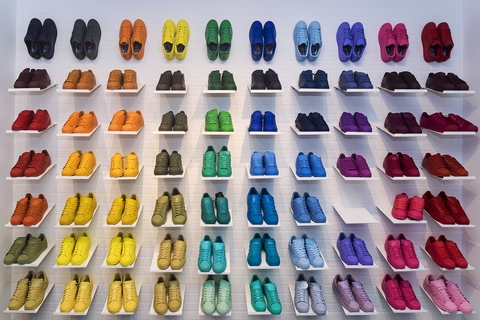
The Russian footwear market grew by just over 10% last year to a new total value of $11.6 billion; however, it was a poor year for the more expensive side of the market. Consumers’ mindset seemed to change in the 12 months of 2015 and the number of impulse buys feel from 15% to nearly nothing at all. It seems as though consumers are spending money when planned rather than buying products on a limb.
Although there was increased attention for some of the smaller names in the industry, it was Adidas, Kari, TsentroObuy, and Ekonika who remained as the main names that consumers went for. However, they have all experienced problems in the last year as TsentroObuy, for example, says that it is facing problems with cash flow and a number of their suppliers have complained at a lack of payment. Furthermore, there has been a significant reduction in the amount of Adidas stores in Russia and they mainly exist in the largest malls currently. Ekonika has listened to what the market is saying as has removed some of the more expensive brands of shoe as well as choosing to base more of their operations online. They did just recently open three new stores in Moscow and it remains to be seen how these will effect their obvious move towards e-commerce.
This change in market conditions has affected the mid-market significantly and many have looked towards merging in order to stay afloat moving into the future. One of the most well-known names in the mid-market, Zanden, recently joined forces with German company, Thomas Munz. The latter only had 26 stores in Russia with Zanden offering nearly eight times as many but the new combined group are said to be focusing on a wide variety of shoes at a wide variety of prices.
This struggle for the mid-sector is nothing new for the Russian market, specialists have pointed out that the consumers normally go for either the higher price point or the low-cost option. Even to this day, Antelope has been the only successful company that choose to operate in the middle sector and they specialise in children’s shoes.
Despite this recent news, many malls and shopping centres seem reluctant to lose footwear stores from their locations completely as they can be useful for maintaining footfall numbers and to draw people in to the centres. Some have even taken the drastic steps of reducing rent to keep them in their malls; rent is believed to have fallen by nearly 70% for footwear stores in recent times. In the past, shopping centres have said that they like to have five or more shoe stores operating as this helps to draw in the crowds and allows for a higher rent to be charged to smaller shops and restaurants.
However, even the low rent may not save physical stores in the coming years because e-commerce is starting to take over the industry. Many companies have found success online, including Wildberry and LaModa, and it seems to be the chosen route in the future. This could spell the end for some smaller names though because only the biggest stores can offer a fast delivery service; a consumer would much rather buy from a site they can get one/two day delivery compared to a site that can only get orders to consumers within a week.
Image Provided by: © Dimbar76 | Dreamstime.com
You might be also interested in these articles;
Poland: New store for Martes Sport
Germany leads sports footwear market
Outdoorzy reveals plans to list on NewConnect
Lidl diversifies into sports apparel
Czech shopping trends changing
Partner Search Marketplace
Expert Partner Search